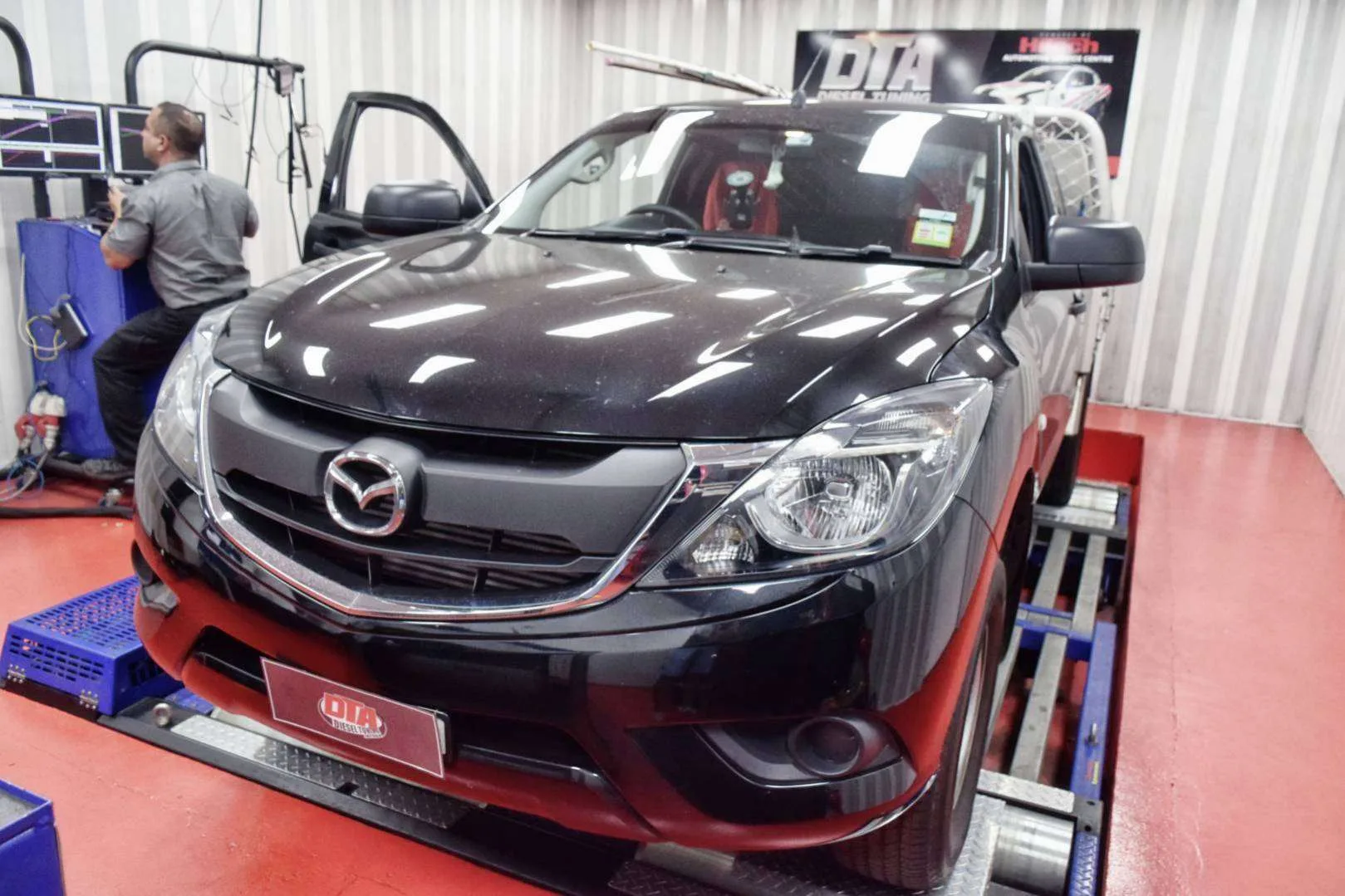
The 2 L 4-cylinder in the Mini Hatch is a solid, mid-range diesel — enough torque to be genuinely useful, calibrated cautiously enough to survive every market where the manufacturer sells it. The result is a factory map that's deliberately muted. Most of the real-world gain we make on a remap comes from recovering that headroom safely.
Our dyno-developed map for the Mini Hatch adds an average of 9 kW (18%) at the wheels and 51 Nm (19%) of engine torque. That's the target band we work towards on this engine — meaningful gains you feel every time you pull out to overtake or climb a grade, without pushing the injectors, turbo or transmission anywhere near their limits.
In practical terms, that works out to around 6 fewer tanks of diesel over 40,000 km. At a typical 15,000 km annual mileage, most Mini Hatch owners save roughly 153 L and $184 per year at the pump — purely from improved combustion efficiency at part-throttle, where diesels spend most of their time.
This Mini Hatch variant ran from 2011–2013. The factory calibration changed very little across that production window; we have the original file for each year and always confirm which one matches the car in front of us before we start.
BMW N47
The N47 family (1.6 / 2.0) is the first generation of common-rail BMW diesels with serious tuning potential. Timing-chain durability is the headline service item; tuning has no impact on it. Our maps target a smoother torque rise without stressing the chain or DMF.