The 2 L 4-cylinder in the BMW 2 Series is a performance diesel — high injection pressure, a variable-geometry or twin turbocharger, and a tight calibration that was set for global emissions targets rather than for what the engine can actually sustain. That's the gap a custom dyno-developed map closes: not more hardware, just a calibration that matches the engine's real capability.
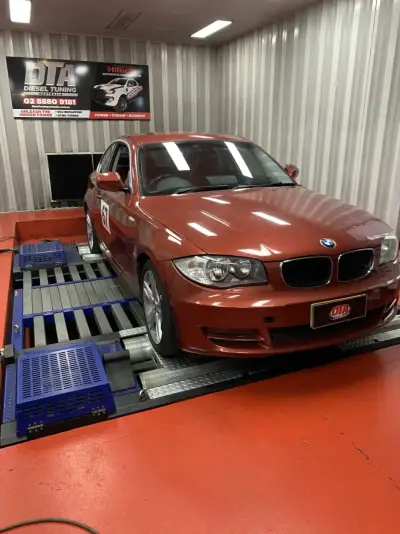
Our dyno-developed map for the BMW 2 Series adds an average of 28 kW (26%) at the wheels and 87 Nm (23%) of engine torque. At this level the car genuinely changes character — overtaking on single-lane highways stops being a commitment, and the mid-range pull from around 1,500 to 3,000 rpm is transformed. You notice it most on the highway on-ramp and in the first third of an overtake.
In practical terms, that works out to around 5 fewer tanks of diesel over 40,000 km. At a typical 15,000 km annual mileage, most BMW 2 Series owners save roughly 132 L and $158 per year at the pump — purely from improved combustion efficiency at part-throttle, where diesels spend most of their time.
This BMW 2 Series variant was sold in 2014 only. We hold the original factory calibration file for that model year and develop the map on our dyno against that specific ECU — not a generic file that also fits a different year or spec.
BMW N47
The N47 family (1.6 / 2.0) is the first generation of common-rail BMW diesels with serious tuning potential. Timing-chain durability is the headline service item; tuning has no impact on it. Our maps target a smoother torque rise without stressing the chain or DMF.