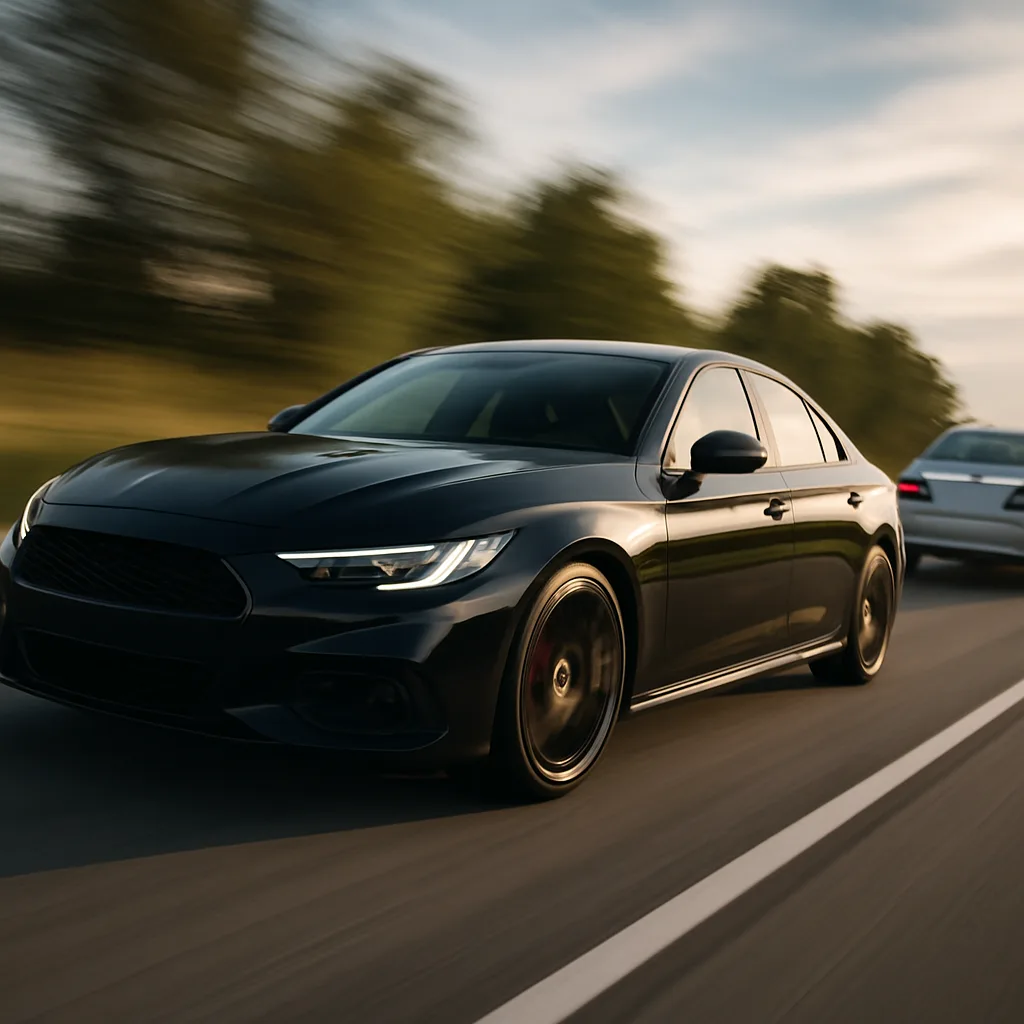
The X5 diesel — X5 30d, 35d and M50d — is one of the most satisfying remaps we do. The factory tune is already impressive; a custom map makes it genuinely exceptional. Most X5 diesel owners are looking for the sharpened throttle response and extra mid-range pull that turns a very good car into something that genuinely surprises you on the open road.
The 3 L engine in the BMW X5 is at the top end of what this displacement produces — serious injection pressure, sophisticated turbocharger management, and a factory calibration that leaves room on the table by design. These engines are well-engineered enough that a careful, dyno-developed map extracts meaningful gains without asking anything the hardware isn't already built to handle.
Our dyno-developed map for the BMW X5 adds an average of 39 kW (21%) at the wheels and 144 Nm (19%) of engine torque. That's the target band we work towards on this engine — meaningful gains you feel every time you pull out to overtake or climb a grade, without pushing the injectors, turbo or transmission anywhere near their limits.
In practical terms, that works out to around 9 fewer tanks of diesel over 40,000 km. At a typical 15,000 km annual mileage, most BMW X5 owners save roughly 225 L and $270 per year at the pump — purely from improved combustion efficiency at part-throttle, where diesels spend most of their time.
This BMW X5 variant was sold in 2019 only. We hold the original factory calibration file for that model year and develop the map on our dyno against that specific ECU — not a generic file that also fits a different year or spec.
BMW B57
The B57 succeeded the N57 from 2015. It runs a modular design with single-turbo and bi-turbo variants. Calibration headroom is genuine, and our maps preserve the smooth, near-petrol delivery the B57 is famous for.